
Training
Badminton Footwork Drills for Competitive Juniors: 8 Drills That Build Speed
Eight badminton footwork drills for competitive juniors, from shadow six-corners to reaction work, plus the split step, lunge technique and common mistakes.
By AC Elite Sports Editorial Team · 2 November 2026 · 6 min read
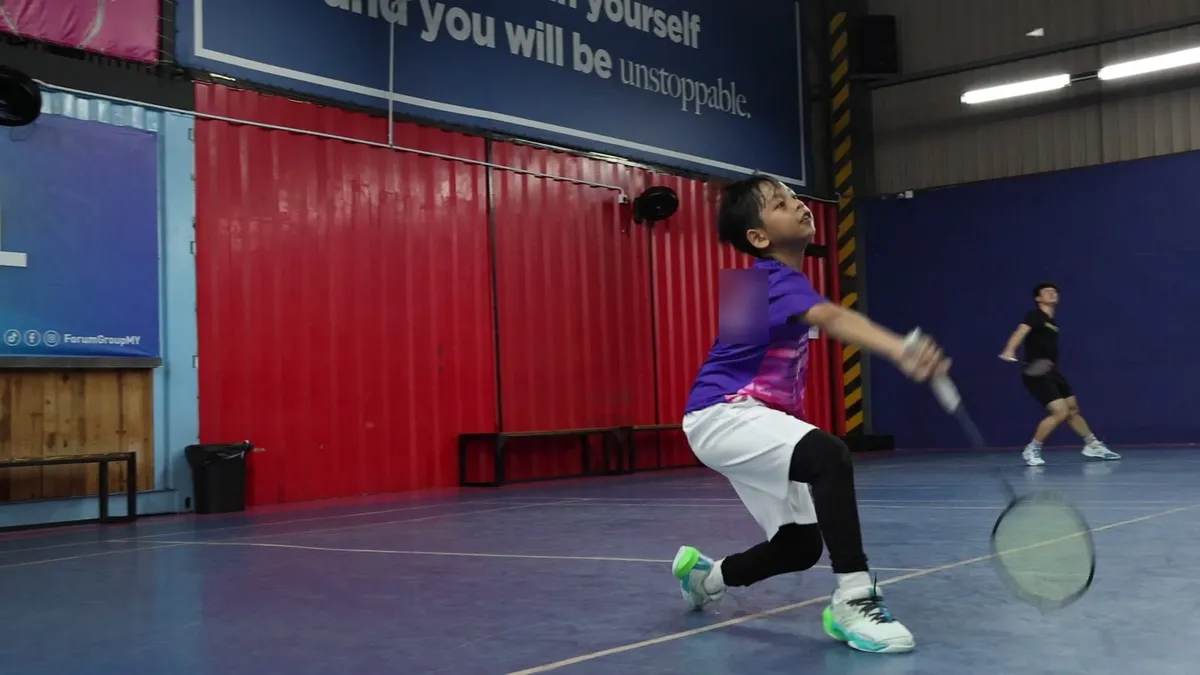
The best badminton footwork drills for competitive juniors train one cycle: split step, move to the shuttle, hit, and recover to base. Start with shadow drills to groove the patterns, then add speed, then add reaction and real shuttles. Below are eight drills used in performance training, how to progress them by age, and the technique points that make the difference.
In this guide
- Why footwork matters more as players improve
- The four parts of every movement
- 8 footwork drills for competitive juniors
- How to progress footwork drills by age
- Common footwork mistakes and how to fix them
Why footwork matters more as players improve
At club level, a player with good hands can get away with average movement. At national and international junior level they cannot. Opponents hit faster and wider, and every late arrival turns into a weak reply. Research on competitive singles shows the lunge alone makes up around 15–18% of all movements on court, and a player repeats that movement dozens of times a game. Lunge quality also declines with fatigue, so players need to move well and keep moving well.
Footwork is also where juniors can improve fastest. Strokes take years to refine, but timing, base position and recovery can change noticeably in a few months of focused work.
The four parts of every movement
Every movement on court follows the same four steps. Drills work best when the player knows which one they are training.
- Split step. A small hop that lands, feet slightly wider than shoulders, just as the opponent hits the shuttle. It loads the legs so the first step can go in any direction.
- First step and travel. The first step is the fastest and most important. Then chassé steps, crossover steps or running steps carry the player to the shuttle, depending on distance.
- Hitting position. Usually a lunge at the front and sides, and a scissor jump or chassé-and-turn at the rear. The body should be balanced at the moment of hitting.
- Recovery. Push back towards base immediately after the shot, ready for the next split step. Slow recovery is the most common reason juniors are late for the next shot.
8 footwork drills for competitive juniors
1. Shadow six-corners
The player starts at base and moves to the six corners of the court (two front, two middle, two rear) in a fixed order, playing a shadow stroke at each and recovering to base every time.
- Sets: 4–6 sets of 30–45 seconds, with 45–60 seconds of rest.
- Coaching point: a split step before every movement and full recovery to base. No shortcuts.
2. Coach-called random corners
The same as drill 1, but the coach points or calls a corner at random just before the player’s split step. This adds reading and reaction.
- Sets: 6–8 sets of 20–30 seconds.
- Progression: the coach calls later and later, so the player has less time to react.
3. Split-step timing drill
The coach or a partner stands across the net and mimics hitting. The player must land the split step exactly as the racket makes “contact”, then take one explosive first step in the direction shown.
- Sets: 3–4 sets of 10 repetitions.
- Why it matters: many juniors split too early and land flat-footed, or too late and are still in the air when the shuttle is hit.
4. Front-court lunge and recover
The player lunges to alternate front corners, plays a net shot (shadow or fed shuttle) and pushes back to base. The focus is on a heel-first landing, the front knee tracking over the toes, and a strong push-back.
- Sets: 4–5 sets of 8–12 lunges per side.
- Coaching point: a stable upper body at the net. No leaning or overreaching.
5. Rear-court chassé and scissor kick
The player moves from base to the rear forehand and round-the-head corners using chassé steps, then hits a shadow smash or clear with a scissor kick, landing balanced and recovering forward.
- Sets: 4–6 sets of 6–8 repetitions.
- Coaching point: turn the body early, so the player hits from behind the shuttle rather than reaching back.
6. Multi-shuttle movement
The coach feeds shuttles quickly to different corners from across the net. The player moves, hits and recovers at match speed. This connects footwork with real strokes.
- Sets: 5–8 sets of 15–25 shuttles, with rest between sets roughly twice as long as the work.
- Progression: faster feeds, then random rather than fixed patterns.
7. Agility ladder and line drills
Fast feet patterns on a ladder or court lines: in-outs, lateral shuffles, crossovers and hops. These build foot speed and coordination and can be done off court or at home.
- Sets: 6–10 runs through the ladder, with walking rest.
- Note: keep these short and sharp. They support footwork. They do not replace on-court patterns.
8. Rally-length intervals
Shadow movement to random corners for 6–10 seconds (about the length of a real rally), then 15–20 seconds of rest, repeated for several sets. This trains the repeated short efforts that match play demands.
- Sets: 2–3 blocks of 8–10 repetitions, with 2–3 minutes between blocks.
- Why it matters: research reviews report average rallies of about 7–8 seconds with roughly 15 seconds of rest, so this mirrors the rhythm of a match.
How to progress footwork drills by age
| Age | Focus | Drill emphasis |
|---|---|---|
| 11–13 | Correct patterns, balance, enjoyment | Shadow six-corners, ladder work, split-step timing, short sets |
| 14–16 | Speed and consistency under pressure | Random corners, multi-shuttle, lunge strength, rear-court movement |
| 17–18 | Match-speed movement and endurance | Rally-length intervals, late-called reaction drills, multi-shuttle at high intensity |
Progress one variable at a time: first pattern, then speed, then reaction, then volume. If technique breaks down, go back one step.
Common footwork mistakes and how to fix them
| Mistake | What it causes | Fix |
|---|---|---|
| No split step, or the wrong timing | Late first step, shuttle taken late | Split-step timing drill; a coach calls “hit” at contact |
| Slow recovery after the shot | Late for the next shot | Six-corners with a strict “back to base” rule |
| Overreaching in the lunge | Weak net shots, knee strain | Shorter, faster steps before the lunge; lunge strength work |
| Flat-footed landing | Slow push-off, ankle strain | Light, springy split step on the balls of the feet |
| Turning late at the rear court | Hitting from beside or in front of the shuttle | Rear-court chassé drill with an early shoulder turn |
Train fresh. Footwork drills build speed only when done at high quality. Put them early in the session, keep sets short, and stop a set when movement gets sloppy.
Putting footwork into a weekly plan
Most competitive juniors do 15–30 minutes of footwork in almost every court session, plus leg strength work two or three times a week. See our badminton training programme for competitive juniors for a full sample week, and the guide to BWF junior rankings for how training ties into the tournaments that count.
At AC Elite Sports in Subang Jaya, Head Coach Hariawan coaches competitive players, from juniors to adults, aiming for state, national or international level. Footwork, technique and match strategy are part of every programme. See programmes and fees, or book 1-to-1 coaching for individual movement work.
Frequently asked questions
How often should juniors do footwork drills?+
Competitive juniors usually do some footwork in almost every court session, often 15–30 minutes after the warm-up while they are fresh. Longer, dedicated footwork sessions can be added once or twice a week. Keep sets short and fast, and stop when quality drops.
What is the split step in badminton?+
The split step is a small hop that lands with feet slightly wider than shoulder width just as the opponent hits the shuttle. It loads the legs so the player can push off quickly in any direction. Mistimed split steps, too early or too late, are one of the most common reasons juniors arrive late to the shuttle.
Can footwork be trained at home?+
Yes. Shadow footwork, ladder or line drills, jump-rope work and bodyweight strength exercises like lunges and squats can all be done at home with little space. They do not replace court time with a coach, but they build patterns and leg strength between sessions.
How do I stop my child getting knee pain from lunging?+
Check lunge technique first: the front knee should track over the toes, the heel should land first, and the player should not overreach. Build leg strength gradually, avoid big jumps in training volume, and get persistent pain checked by a doctor or physiotherapist, especially during growth spurts.
What is the difference between a chassé and a crossover step?+
In a chassé, the feet move sideways without crossing (step, close, step), which keeps the body balanced and ready to change direction. In a crossover step, one leg crosses in front of or behind the other to cover more distance quickly. Players use both, depending on how far and how fast they need to move.
Sources
- Phomsoupha M, Laffaye G. The science of badminton: game characteristics, anthropometry, physiology, visual fitness and biomechanics. Sports Medicine, 2015
- Valldecabres R et al. Players' on-court movements and contextual variables in badminton world championship. Frontiers in Psychology, 2020
- Lin Z. Significance of the smash-lunge sequence and lunges in relation to badminton singles match performance (PhD thesis), Edith Cowan University, 2022