
Training
Badminton Training Programme for Competitive Juniors: A Complete Weekly Plan
How competitive juniors should plan badminton training by age: weekly hours, technique, footwork, fitness, match play and recovery, with a sample week.
By AC Elite Sports Editorial Team · 2 November 2026 · 9 min read
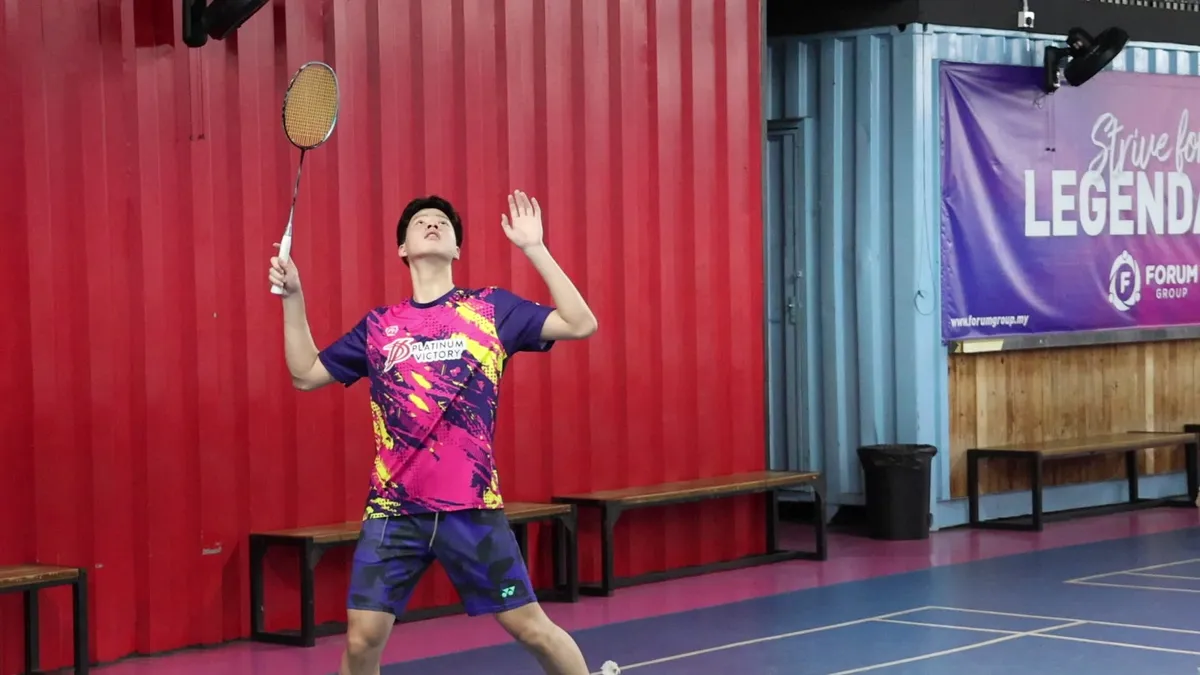
A competitive junior badminton programme combines five things every week: technique, footwork, physical conditioning, tactics and match play, and recovery. The balance shifts with age. A 12-year-old needs more skill and movement work and less volume, while a 17-year-old on an international track trains most days and plans the season around target tournaments. This guide explains what the sport demands, how much to train at each age, and what a sound weekly plan looks like.
In this guide
- What does badminton demand from a junior player?
- How many hours a week should a competitive junior train?
- The five building blocks of a junior programme
- A sample weekly training plan
- How should training change through the season?
- What physical training is right for 11–18 year olds?
- How do you balance training, school and recovery?
- How do you know the programme is working?
What does badminton demand from a junior player?
Badminton is a sport of short, explosive bursts. Research reviews of elite singles report that a rally lasts about 7–8 seconds on average, followed by roughly 15 seconds of rest before the next point, and a men’s singles match lasts around half an hour of total time on court. Within each rally, a player accelerates, changes direction, lunges and jumps, often several times.
Three features of the modern game shape how juniors should train:
- Repeated short efforts. Players need to produce explosive movement again and again with incomplete recovery between rallies. Long, slow jogging does little for this. Interval-style court work does a lot.
- Lunging. Studies of competitive singles put the lunge at roughly 15–18% of all movements, making it the most frequent movement on court. Lunge quality also tends to decline as a match goes on, so leg strength and lunge endurance matter.
- A faster game. An analysis of Olympic men’s singles finals from 1992 to 2012 found that players hit more shots per rally and the game became faster over that period. Juniors who want to compete internationally must train to handle that speed, not the pace of local club play.
What this means for training: most of a junior’s court time should be spent at match speed, in short, intense blocks with planned rest. This mirrors what happens in a real game.
How many hours a week should a competitive junior train?
There is no single correct number, but volume should grow with age, physical maturity and level. The ranges below are typical of performance programmes for players who already compete. They are guides, not rules.
| Age and level | Court sessions per week | Approximate hours per week | Main emphasis |
|---|---|---|---|
| 11–13, competitive | 3–5 | 6–10 | Technique, footwork patterns, movement skills, enjoyment of competition |
| 14–16, state or national level | 5–8 | 10–15 | Technique under pressure, physical development, tactics, regular tournaments |
| 17–18, international track | 8–10 or more | 15 or more | Match-speed training, periodised season, international junior events |
Two cautions apply at every age:
- Volume only counts if the player recovers from it. A player who trains 12 hours a week and is always tired is not ahead of one who trains 9 hours and arrives fresh.
- Growth changes everything. During a growth spurt, coordination can temporarily drop and joints are more vulnerable. Coaches often reduce jumping and heavy loading for a period and focus on technique.
The IOC’s consensus statement on youth athletic development warns against too much, too soon. It links excessive training loads and early single-sport specialisation with a higher risk of overuse injury and burnout, and it recommends that programmes respect each child’s growth and maturity.
The five building blocks of a junior programme
Every good junior programme covers the same five areas. What changes with age is how much time each one gets.
1. Technique
Grip, racket preparation and stroke production for every shot: clears, drops, smashes, net shots, lifts, drives and defence. Juniors refine technique through repetition (multi-shuttle feeding and pressure drills), then test it under match-like conditions. Technique work should always connect to movement, because a perfect stroke from the wrong position is still a weak shot.
2. Footwork
Movement from the base to all corners of the court and back, including the split step, chassé steps, crossover steps, lunges, scissor jumps and recovery. Footwork is the foundation for everything else, so most performance programmes train it in almost every session. Our badminton footwork drills guide covers the core patterns and drills in detail.
3. Physical conditioning
Speed, agility, leg and core strength, power, mobility and badminton-specific endurance. For juniors, conditioning is about building a robust, athletic body that can handle more court time over the years, not about maximal lifting.
4. Tactics and match play
Shot selection, patterns of play, reading the opponent and managing the score. Conditioned games (“you can only win the point at the net”) teach tactics faster than unstructured games. Regular competitive matches against players of a similar or higher level are essential.
5. Recovery and mental skills
Sleep, nutrition, rest days, routines between points and handling pressure. These are part of the programme, not extras. A player who can stay calm at 19–19 has trained that skill.
A sample weekly training plan
Below is a sample week for a competitive 14–16-year-old during the main training period, built around school hours. A younger player would do fewer sessions. An international-track 17–18-year-old would add morning sessions and more match play.
| Day | Session | Focus |
|---|---|---|
| Monday | Court (2–3 h) | Footwork patterns, then technique under pressure (multi-shuttle) |
| Tuesday | Court (2–3 h) + physical (45 min) | Rear-court attack and defence; lower-body strength |
| Wednesday | Court (2–3 h) | Net play and front-court movement; conditioned games |
| Thursday | Court (2–3 h) + physical (45 min) | Speed and agility; match-pattern drills |
| Friday | Court (2 h) | Lighter technical session; serve and return |
| Saturday | Match play (2–3 h) | Practice matches or a tournament |
| Sunday | Rest | Full rest or light mobility only |
How to use a plan like this:
- Put the most demanding work early in the week, when players are freshest.
- Keep one full rest day, and protect it.
- In a tournament week, cut volume by roughly a third to a half and keep the intensity. Players should arrive at the event sharp, not tired.
- Adjust every week for school exams, illness and how the player feels. A plan is a starting point.
How should training change through the season?
Serious junior programmes plan the year in phases, built around the tournaments that matter most. This is called periodisation.
| Phase | When | Training focus |
|---|---|---|
| Preparation | After a break, 6–10 weeks before key events | Higher volume: strength, endurance, technical rebuilding |
| Pre-competition | 3–6 weeks before key events | Higher intensity, match-speed drills, more practice matches |
| Competition | During the tournament block | Lower volume, sharpness, tactics for specific opponents, recovery between events |
| Transition | After the season’s main events | Rest, other sports, fixing injuries, setting new goals |
For players chasing international results, the target events are usually national junior championships and BWF-sanctioned junior tournaments, whose results feed the world junior ranking. Our guide to BWF junior rankings explains how those points work, which helps when choosing which tournaments to target.
What physical training is right for 11–18 year olds?
Supervised strength training is safe and useful for young athletes when it is well designed. The IOC consensus statement supports appropriately structured strength and conditioning for youth. For badminton juniors, it usually progresses like this:
- Ages 11–13: bodyweight strength (squats, lunges, push-ups, planks), jumping and landing technique, agility games, coordination and mobility. Focus on moving well.
- Ages 14–16: add light external loads with strict technique, single-leg strength, plyometrics in controlled volumes, and core stability for rotation. Adjust around growth spurts.
- Ages 17–18: more structured strength and power phases, speed work and badminton-specific conditioning (for example, court sprints and on-court intervals that mimic rally and rest times).
Badminton-specific conditioning often uses the game’s own rhythm. Efforts of 5–10 seconds at full speed with 10–20 seconds of rest, repeated in sets, are a common format because they match typical rally and rest times.
Watch for warning signs. Persistent heel or knee pain during growth spurts, a drop in performance despite training hard, poor sleep or loss of motivation are reasons to reduce load and talk to the coach and, where needed, a doctor or physiotherapist.
How do you balance training, school and recovery?
Most competitive juniors in Malaysia are also full-time students, so the programme has to fit around school, homework and exams. A few habits make a big difference:
- Sleep is the most effective recovery tool. Teenagers generally need 8–10 hours a night, and early-morning sessions only work if bedtimes move earlier too.
- Eat around training. A proper meal 2–3 hours before court time, a snack if needed, and a meal with carbohydrate and protein afterwards.
- Hydrate. Malaysian halls are hot and humid, so players lose a lot of fluid. Drink regularly before, during and after sessions.
- Plan exam periods. Reduce volume during major exams rather than stopping completely. Short, high-quality sessions keep skills sharp.
- Keep it enjoyable. Players who enjoy training stay in the sport longer. The IOC statement highlights burnout as a real risk in youth sport.
How do you know the programme is working?
Track a few things over a season, not just one tournament:
- Movement. Is the player getting to the shuttle earlier and recovering to base faster? Simple timed footwork tests every 6–8 weeks show this.
- Consistency under pressure. Fewer unforced errors in tight games is a sign that technique is holding up at match speed.
- Results against stronger players. Close games against higher-ranked opponents often come before wins.
- Ranking progress. National junior rankings and, for older players, the BWF world junior ranking give an objective measure over time.
- Health and enjoyment. A player who stays injury-free and motivated through a full season is on the right path.
The key point. Badminton rallies average about 7–8 seconds with roughly 15 seconds of rest between them, and lunges make up around 15–18% of a singles player’s movements (Phomsoupha & Laffaye, 2015; Valldecabres et al., 2020; Lin, 2022). Effective junior training therefore centres on repeated, high-speed court work and footwork, progressed by age, balanced with rest and recovery, and planned around a few target tournaments each season.
How AC Elite Sports structures training
At AC Elite Sports in Subang Jaya, training is led by Head Coach Hariawan, whose career includes national-team roles with Indonesia, India and Vietnam. Sessions run in the morning and afternoon on weekdays, with sessions on Saturday and Sunday too, so players can build a weekly plan around school. Players can train on an unlimited monthly plan, buy group session packages, walk in for single sessions, or book 1-to-1 coaching for individual technical and tactical work.
The programme is for competitive players, from juniors to adults, who already play well and are aiming for state, national or international level. See programmes and fees for the schedule and prices, or read Coach Hariawan’s coaching record.
Frequently asked questions
How many hours a week should a competitive junior badminton player train?+
It depends on age and level. Many performance programmes use roughly 6–10 hours a week for players aged 11–13, 10–15 hours at 14–16, and 15 hours or more for players aged 17–18 on an international track. These are typical ranges, not rules. The right number is the one a player can recover from while keeping up with school.
Is strength training safe for junior badminton players?+
Yes, when it is supervised and progressed sensibly. Bodyweight work, technique-led lifting and plyometrics build the leg and core strength that lunging and jumping demand. The IOC's consensus statement on youth athletic development supports appropriately designed strength training for young athletes. Load should be adjusted around growth spurts.
Should my child play only badminton?+
Specialising very early can raise the risk of overuse injury and burnout. Many experts recommend a broad base of movement skills in younger years, then more badminton-specific training through the teens. By 14–16, players aiming for national or international level usually train badminton most days, but still need rest days and some variety.
How often should a junior play competitive matches?+
Regular match play is essential, but tournaments should be planned. Players usually do best with a few target tournaments per season, smaller events for experience in between, and a lighter training week before each major competition.
What is the most important skill for a junior badminton player to train?+
Footwork. Good movement puts the player in position to play every shot well, and poor movement can't be hidden by good racket skills at higher levels. Technique, tactics and fitness all matter, but footwork is the base they are built on.
How do I know if a training programme is working?+
Look for steady improvement in a few measurable areas: movement speed and recovery to base, consistency under pressure, match results against stronger players, and ranking progress over a season. A good coach reviews these with the player regularly and adjusts the plan.
Sources
- Phomsoupha M, Laffaye G. The science of badminton: game characteristics, anthropometry, physiology, visual fitness and biomechanics. Sports Medicine, 2015
- Laffaye G, Phomsoupha M, Dor F. Changes in the game characteristics of a badminton match: a longitudinal study through the Olympic Game finals analysis in men's singles. Journal of Sports Science and Medicine, 2015
- Valldecabres R et al. Players' on-court movements and contextual variables in badminton world championship. Frontiers in Psychology, 2020
- Lin Z. Significance of the smash-lunge sequence and lunges in relation to badminton singles match performance (PhD thesis), Edith Cowan University, 2022
- Bergeron MF et al. International Olympic Committee consensus statement on youth athletic development. British Journal of Sports Medicine, 2015